 By
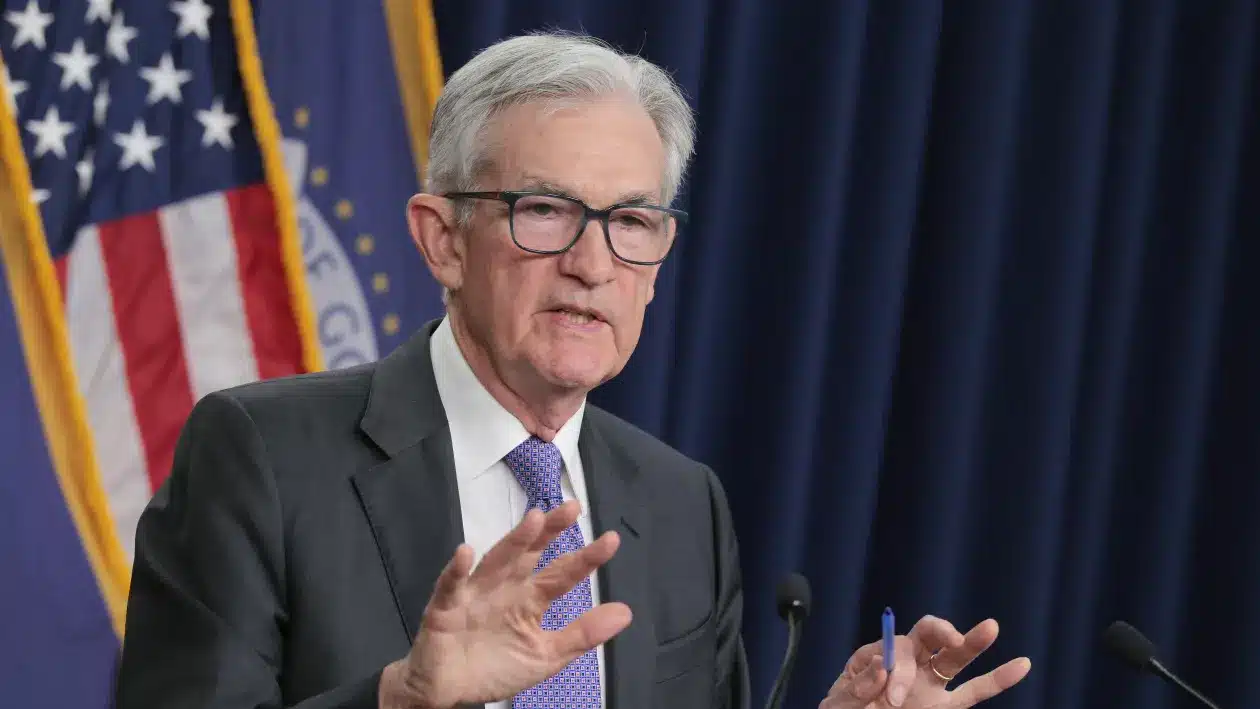
By The Federal Reserve is set to announce if it will adjust its benchmark interest rate on Wednesday, with President Donald Trump pushing for a rate cut.
Trump renewed his call for interest rate cuts in a speech at the World Economic Forum on Jan. 21, during which he also mocked Federal Reserve Chair Jerome Powell as “too late” for not lowering the benchmark rate sooner.
While the Fed has enacted three 25 basis point cuts since September, Trump has argued the central bank waited too long to begin cutting rates and is now moving too cautiously.
However, the Fed is unlikely to adjust rates in the coming months — as of Tuesday afternoon, there’s about a 72% chance that the Fed’s benchmark rate holds steady through most of April, according to the CME FedWatch tool, which tracks market expectations based on futures pricing.
The Fed’s rate-setting committee is expected to keep its benchmark federal funds rate unchanged at 3.50% to 3.75% on Wednesday, per the CME FedWatch tool, a decision that influences mortgage rates, credit cards and loans.
But that influence is indirect and uneven across different types of borrowing. The Fed sets a short-term rate that affects credit cards and other bank loans, while longer-term loans like mortgages are driven more by the 10-year Treasury yield. As a result, mortgage rates can rise even when the Fed makes cuts, though changes to the federal funds rate still influence when banks lower borrowing costs.
Why the Fed is expected to keep rates steady
The Fed’s most recent dot plot, a snapshot of policymakers’ interest-rate projections released in December, showed a more cautious path for rate cuts than previously projected, with the median view placing the federal funds rate in the low-to-mid 3% range by the end of 2026.
That caution reflects ongoing inflation concerns, with Powell saying that “risks to inflation are tilted to the upside” at a press conference in December.
Closely watched inflation measures remain above the Fed’s year-over-year target of 2%, with the consumer price index rate at 2.7% as of December 2025 and the Fed’s preferred personal consumption expenditures price index at 2.8% as of November 2025, even as CPI inflation has eased from its post-pandemic peak of 9.1% in June 2022.
Tariffs are another factor to consider. Businesses report that existing tariffs are raising costs and that uncertainty around potential new levies complicate planning and investment, according to the Fed’s Beige Book.
“Tariffs, though not as inflationary as the consensus once believed, nonetheless still present an inflationary threat,” Milton Ezrati, chief economist at financial services firm Vested, tells CNBC Make It.
At the same time, the labor market and broader economy have shown resilience, with unemployment low by historical standards.
“The economy, though perhaps not as robust as it once was, does not seem in urgent need of help,” while inflation “remains above the Fed’s target,” says Ezrati. For that reason, “the [Federal Open Market Committee] will likely hold off on further rate cuts until April, or maybe even longer.”
The Fed’s decision will be closely watched
The Federal Reserve has a dual mandate to keep inflation in check while supporting a healthy job market. It does that mainly by adjusting its federal funds rate, which influences borrowing costs. A higher rate restricts investment and borrowing, which can help lower inflation.
Decisions about that rate are made by the Federal Open Market Committee, a 12-member panel of Fed governors and regional bank presidents. Powell, whom Trump appointed during his first term, is eligible for reappointment when his term ends in May, but Trump has said he plans to name a new chair.
In a televised address on Dec. 17, Trump challenged the Fed’s independence, saying the next Fed chair — a role nominated by the president and confirmed by the Senate — should be someone who “believes in lower interest rates, by a lot.”
However, while the Fed chair leads the meetings, they hold just one vote and any rate change requires majority support.
This dispute has played out amid a Justice Department investigation involving the Federal Reserve. On Jan. 11, Powell issued a rare video statement after prosecutors served grand jury subpoenas seeking records related to his June 2025 congressional testimony about cost overruns tied to a roughly $2.5 billion renovation of the Fed’s headquarters.
Powell said the investigation should be viewed “in the broader context of the administration’s threats and ongoing pressure,” warning it could undermine the central bank’s independence. Trump denied any knowledge of the investigation in a Jan. 12 phone call with NBC News.
“This is about whether the Fed will be able to continue to set interest rates based on evidence and economic conditions — or whether instead monetary policy will be directed by political pressure or intimidation,” Powell said.
View Source Above content are taken from external website. If original source wants to remove content please contact us.