 By
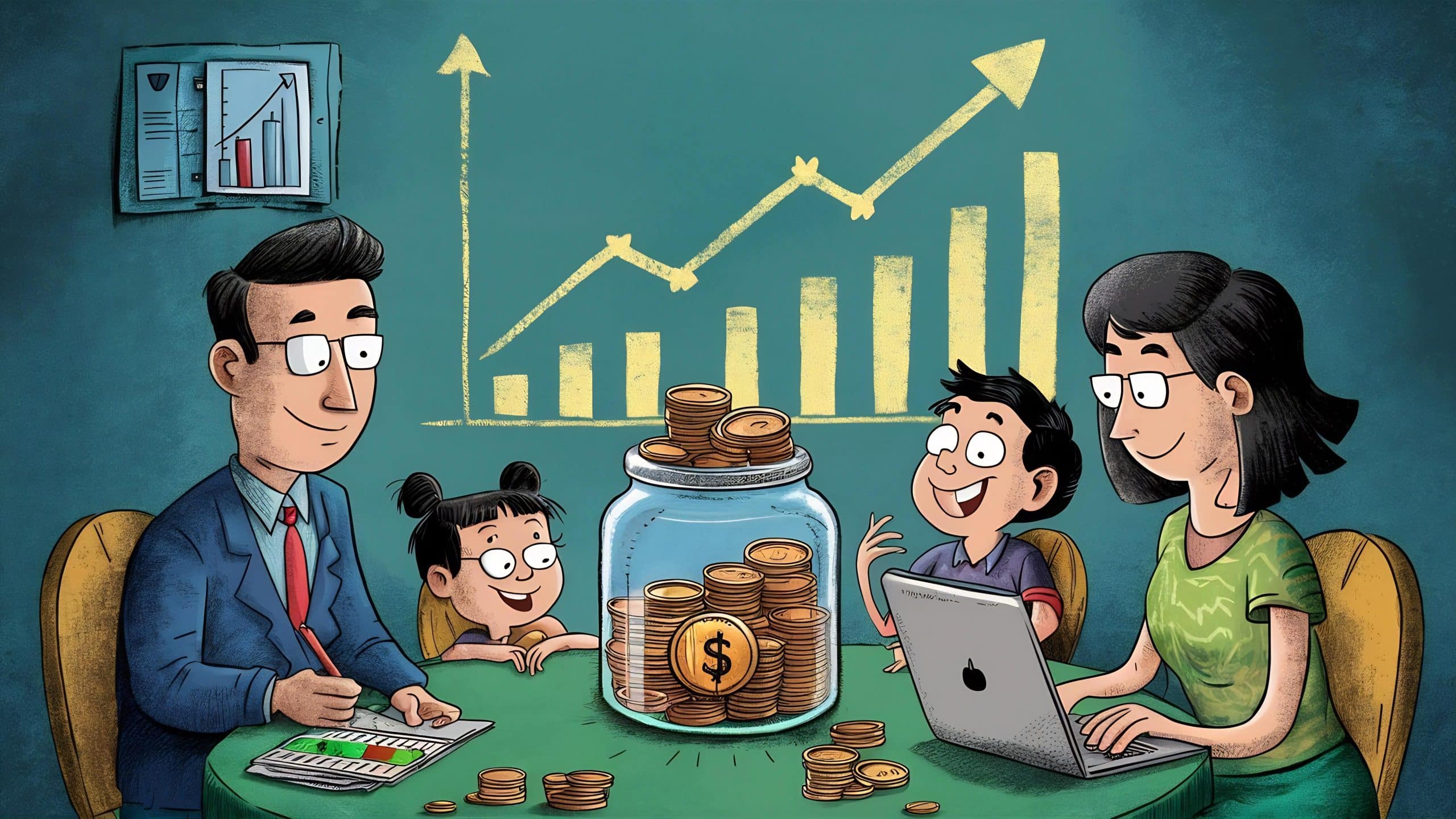
By Credit cards carried the load in Q4 as Americans piled another $44 billion onto their balances, pushing the total to $1.28 trillion, a 5.5% jump from last year. The New York Fed’s Q4 2025 report shows households leaning on revolving credit to keep their budgets intact, and the strain is starting to show. The strategy is running out of runway.
America’s total credit card debt hit $1.28 trillion in Q4 2025, a 5.5% increase from the previous year, driven by a 4.0% personal savings rate in Q1 2026 and rising borrowing costs.
The savings rate is doing the explaining
Personal income keeps rising, but it is not giving households the breathing room they should. Disposable personal income hit $23,506.8 billion in Q1 2026, up from $22,563.7 billion a year earlier. At the same time, the personal savings rate slid to 4.0% in Q1 2026, down from 6.2% in early 2024. People are earning more, saving less, and the shortfall is landing right on their credit cards.
Prices are the reason everything feels tighter. The Consumer Price Index reached 330.3 in March 2026, a 1.1% jump from the prior month and the twelfth straight monthly increase. Spending on housing climbed to $3,904.5 billion at an annual rate in March 2026. Housing is not something anyone can cut, and when its cost rises faster than wages, the credit card steps in to take the hit.
Are you ahead, or behind on retirement? SmartAsset’s free tool can match you with a financial advisor in minutes to help you answer that today. Each advisor has been carefully vetted, and must act in your best interests. Don’t waste another minute; learn more here.(Sponsor)
The cost of carrying that balance
The Federal Reserve has lowered its target rate to 3.75% from the 4.5% peak in September 2025 and has held it there for about five months. That shift offers a little relief, but credit card APRs still sit in the 15% to 19% range because issuer margins stacked on top of the prime rate keep borrowing costs high. A balance carried at 18% quietly doubles the price of whatever was bought in roughly four years if the minimum payment is all that ever goes in.
Credit card industry
The four main networks facilitating credit card transactions are Mastercard, Visa, Discover, and American Express. Visa and Mastercard are by far the largest networks; cards issued on the Visa or Mastercard networks account for 85% of the U.S. market, with American Express and Discover accounting for most of the remaining 15%.
Credit card issuers are banks, credit unions, and other financial institutions that issue cards in partnership with one of the main networks. There are nearly 4,000 issuers nationwide, but the top 10 represent the majority of the market. In the U.S., JPMorgan Chase was the largest credit card issuer.
Credit card usage
According to the Federal Reserve, 81% of American adults have at least one credit card. However, it’s common to have several cards in your wallet. On average, people have 3.7 cards.
The credit utilization rate — the average amount of available credit consumers use — was 29.1% in September 2025.
How people use their cards varies by their credit scores. On average, consumers spend $5,866 per year on their cards, but those with very good to excellent credit tend to spend significantly more per year than other groups.
- Deep subprime: VantageScores below 580
- Subprime: 300 to 600
- Near-prime: 601 to 660
- Prime: 661 to 720
- Prime plus: 721 to 780
- Super prime: 781 to 850
Credit card rates and fees
The credit card industry is immensely profitable; credit card issuers earned over $130 billion in interest and fees in 2022. Since then, the average annual percentage rate (APR) on credit cards that assessed interest has significantly increased.
In 2021, the average APR on general-use credit cards was 16.45%. As of February 2026, it was 21.52%, an increase of over 5%.
View Source Above content are taken from external website. If original source wants to remove content please contact us.